Showing posts with label Overview. Show all posts

Tuesday, December 29, 2009

2011 Ford Mustang Gets 5.0-Liter V-8


2011 Ford Mustang Gets 5.0-Liter V-8


According to several sources across the web Ford is indeed developing an all-new 32 valve 5.0L V8 engine with the code name 'Coyote' for a return in the 2011 Mustang GT and 2011 Ford F-150. The all-new 5.0L V8 powerplant is said to have 400 horsepower and 400 ft-lbs of torque. The new 5.0L V8 has been rumored for quite sometime and comes as no surprise to Mustang fans who knew Ford would have to do something to keep up with the new Challenger SRT8 and 2010 Camaro SS. Ford has made no official announcement on the new 5.0L V8 as we expect it to stay that way until sometime in 2010. With the refreshed 2010 Mustang GT coming with the 4.6L V8 in a few months Ford would not want to hinder sales of their new pony car by releasing info on the new 5.0L V8.

Monday, November 9, 2009

Steeda Autosports Q500 Mustang (2010) - Overview

Steeda Autosports Q500 Mustang - Overview
Supercharged - Extreme Performance - Competition proven

The Steeda Q500 takes the superb platform of the Q350 and adds a healthy dose of supercharged power only as the team at Steeda Autosports can do. With over 500+ horsepower and 490+ ft. lbs. of torque, this 4.6L supercharged system provides pure power when you need it with complete control from idle up to it’s 6500 rpm redline. Have more power when you need it, without the wait and without compromise of other supercharger systems.

Having all of this power requires a suspension system to plant it to the asphalt, and the Steeda Q500 does that with our proprietary track tested and race proven suspension system. Fly down the quarter mile in 12.2 seconds at over 113 mph and then attain 1.2gs on the skidpad the same set of street tires. Performance, reliability, and exclusivity that is unmatched in the performance industry today!

With exclusive Steeda Autosports equipment, the Steeda Q500 is an outstanding road car performance engineered for the most demanding performance enthusiasts who likes to live in the fast lane!

Steeda - Where Speed Matters


Saturday, May 2, 2009

Car review - Shelby Mustang GT500 (2010)

Car review - Shelby Mustang GT500 (2010)
In my recent review of the 2010 Mustang GT, I suggested that only a slight lack of power vis-à-vis the competition kept the revised pony from five-star status. The new “Shelby”— air-quoted because the car is really a product of the dedicated men and women of Ford’s unsung SVT division—GT500 is a sharp riposte to that concern. At approximately forty-eight thousand dollars, it’s the only 540-horsepower car available under fifty grand. Or sixty. Or seventy. Or eighty. Or ninety. In fact, if the embattled Viper doesn’t show up in showrooms for 2010, it will be the only car for sale in the country with this kind of power under . . . the Corvette ZR-1, which costs nearly three times as much. Ah, but is the über-Stang really worth the premium over the the GT?

When I heard that Ford’s GT500 media preview would take place at Infineon Raceway, it seemed reasonable to assume that we’d be focusing on dragstrip prowess, with a side nod to racetrack potential. Surprisingly, delightfully, Ford chose to start the press day with a one-hundred-and-forty mile drive up the Northern California coastline. Narrow roads, sharp turns, big elevation changes and limited sightlines. From previous testing, I knew the aluminum-block Mustang GT was a competent dance partner under those conditions. Surely the heavy-nosed Shelby would be a bit overmatched by an endless series of camber-change second-gear hairpins?

Car review - Shelby Mustang GT500 (2010)
The answer turned out to be a combination of “kinda” and “hell no.” There’s no getting away from physics. The supercharged iron-block mill hanging over the ’Stang’s front wheels creates a pretty big polar moment of inertia. The GT500 is like a paper airplane with three paperclips on the nose; it wants to fly straight under all circumstances. Drivers who are looking for the darty nose of a Porsche Boxster or Mazda RX-8 can keep looking.

For the 2010 GT500, Ford’s SVT engineers reduced the front swaybar’s diameter while increasing spring stiffness. (The changes permit a quicker load on the outside tire, promoting initial turn-in.) They revised the damping rates to match the new bespoke-pattern Goodyear tires. The payoff: the GT500’s steering wheel now has some real bite on the pavement. Although it takes some force to get the nose turning, it will happen reliably upon driver request. There’s none of the nasty “slip and set” feel familiar to drivers of older Mustangs.

Car review - Shelby Mustang GT500 (2010)
Once the GT500’s steering’s in progress, additional rotation around the car’s vertical axis is available on command. Second gear runs up to nearly eighty miles per hour; the heroic thirty-two-valve Romeo motor can spin the tires without preamble anywhere on the tach. As with the Mustang GT, this feels like a “Euro” engine, closer in power delivery to a Cayenne Turbo’s V8 than to any pushrod ponycar. The Shelby delivers its maximum power above six grand. More importantly, the torque peak is between four and five. It’s a road racer’s dream, awake and alive all the way to the limiter.

Down Highway 1, I find myself reaching for third gear more and more, and occasionally venture into fourth on the exit of the fastest corners. The road’s crowded, but with the ability to reach one hundred and thirty miles per hour in seconds, any visible gap is usable. I see a big “whoop” ahead, a mid-corner hump that obscures the road beyond it, and I hit it at ninety miles per hour. The limiter chatters as the rear wheels spin in midair. I land the big Shelby sideways with the rear tires smoking. What we’re looking for here is something between the auto-correction of a GT-R or Porsche 997 and the unpredictable “death car” wobble of a first-gen Viper. Fortunately, the Mustang Shelby GT500 delivers perfectly.


Still, without active participation, I’ll oscillate off the road, fall down to the rocky seashore, and die. Big opposite-lock. The GT500’s feedback is micrometer-precise. Foot still flat on the floor, I sense the momentum reducing and unwind the steering. Here, that big iron arrowhead is a help, not a hindrance. And get this: we’re still accelerating. Fourth gear and we straighten out. That’s it. I’m in love. The Mustang Shelby GT500 provides all the power you could want, all the control you need, and all of the babysitting electronic crap can be turned off. Perfect.

The rest of the car’s pretty good, too. The interior detailing and features do more justice to the price than one might expect, and NVH levels are almost too respectable. The Shelby GT500’s well-built enough to suck-in the occasional Infiniti or BMW intender. While the Neanderthal retro–look is a bit OTT, the latest ‘Stang certainly earns its stripes. To wit: when Shelby introduced the first GT500 in 1967, he claimed it would be a superior road car. Forty-one years later, it is.


[Ford provided the car reviewed, insurance, access to a closed course and a couple of tanks of gas.]

Saturday, March 21, 2009

Car review - Ford Mustang (2010)

Car review - Ford Mustang (2010)
It’s easy to have mixed feelings about the 2005-2009 Mustang GT. It’s handsome, for the money you paid you got pretty good V8 power and it was fast enough. Where the (suddenly) last-gen Mustang falls down is the lowest bidder interior, questionable handling and non-track day brakes. “Listen baby I had a great time, but don’t lose any sleep sitting by the phone.” But hey, Ford’s prepped a (kinda) all new steed for 2010 and you can bet Mullally’s golden ‘chute that Mustang engineers have been hard at work addressing the above issues. Well, except for the brakes.

Car review - Ford Mustang (2010)
If you have an internet connection and a passing interest in cars, you’ve already sick of seeing the redesigned ‘Stang. But in person, it’s much better looking than in 2D. The detail that struck me hardest were the three creases on the hood. It’s an intriguing, complex surface. The side mirrors are painted body color (yay!) and the antennae has been moved to the rear. And you know, I like the more geometric rear end with the three-bar taillights. I also like the resculpted face. Sure it has some Camaro cues (hooded lights, downhill curve) but they’re good cues and segment appropriate. The only body panel they didn’t change is the roof, but sitting on the fatter (er, more muscular) haunches it reminds me even more of the ‘68 Fastback. Which is good. And you really got to see this baddie in Grabber Blue.

Car review - Ford Mustang (2010)
Ford got halfway to the promised land with the interior. Gone are many of the more egregious examples of IQ insulting penny pinching. For instance the bulk of the dash is now covered in actual aluminum. The gauges are not only crisper but Mustang exclusive. The leather seats sport oversized, contrast stitching and a stylish accent stripe. But there’s hardly any bolstering and after more than an hour, they hurt your back. Another example of almost but not quite: Ford placed soft leather inserts into the doors. Nice. But above ‘em is the same lousy plastic as last year. Pity.

Car review - Ford Mustang (2010)
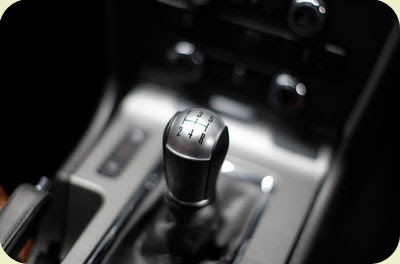
Put your foot into the throttle and you’ll bang your head (against the headrest). Power is up for 2010. Up to Bullitt levels. That’s 315 hp and 325 lb-ft of torque. And check this: should you choose to fill up with premium gas, the ECU makes the torque earlier between 1,000-3,000 rpm. Also like the Bullitt, engine noise is piped into the cabin. Literally. While the sound isn’t quite as sweet as the car McQueen inspired (blame thicker sound proofing), the grunt is better than before. 0-60 times are probably in the 5 second flat range, just like the Bullitt. In certain interior packages, you can even shift gears with the Bullitt’s knob. If you’ve guessed that Ford benchmarked the Bullitt when designing the new car, pat yourself. Why? The Bullitt was the best Mustang Ford ever built.

The Bullitt made great strides in addressing the standard car’s handling issues. The 2010 Mustang GT crosses the finish line. More bracing, tighter spring rates, more damping, thicker sway bars and greatly improved aerodynamics work together to create the first Mustang in memory that thrives in the twisty stuff. Stick your head between the mufflers and you’re still greeted by a thick live axle. Ready for the truth: so what? After seven hours of constant, aggressive driving I encountered exactly one patch of asphalt that upset the rear end. But it was so cruddy that an IRS car would’ve spazzed, too.

Car review - Ford Mustang (2010)
I took the GT up and over some of the most challenging, technical canyon roads Southern California has to offer. The new ‘Stang excelled. I could go hard into essentially every corner and confidently blast my way out (some of the uber tight, near-180 degree guys require a soft entry). Like wow, man — a Mustang that’s actually confidence inspiring on windy roads. The steering is a bit over-boosted and the 19” wheels could use souped up tires, but I’m splitting hairs. Finally we have a Mustang that handles the way every 14-year-old assumes it does. Except for those brakes…

Instead of being an also-ran, value proposition in need of lots-o-mods, the “evolution not revolution” 2010 Mustang is a good performance car right out of the box. For those requiring a bit more brawn, there’s the $1,400 Track Pack that gives you Pirelli P Zeros, stiffer shocks and sways — plus upgraded brakes. The real question though, is whether you should buy a Bullitt right now for several grand off sticker, or wait a month and grab the 2010 Mustang. Probably at full price ($27,000 or so). Tough choice. If forced, I’d say that the Bullitt sounds better whereas the new GT drives better. Meaning this is the best Mustang ever. For now at least.

Thursday, March 19, 2009

The Fast and the Furious: Tokyo Drift - Skyline-Powered 1967 Ford Mustang

The Fast and the Furious: Tokyo Drift - Skyline-Powered 1967 Ford Mustang
So it’s no secret the “Fast and the Furious” line of movies have been a thorn in the side of domestic muscle car owners, in fact the flock of rice (modded imports) taking over the streets of cities nationwide was sparked by this series. It’s also no secret we’ve made fun of those cars too (insert fart-can comment, riceburner, boeing 747 inspired race wing that actually hurts their traction rather than help, etc.).


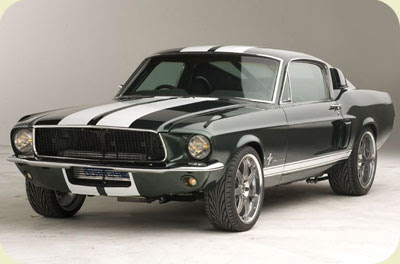
Apparently the ‘hero’ of this latest F&F film is a ‘67 Mustang fastback that eventually sports a Nissan RB26DETT, a twin-turbo 2.6-liter DOHC 24-valve straight-six from the ’holy grail’ of imports… a mid-’90s Nissan Skyline GT-R. This thing laid down 340 rear wheel horsepower at 7,300 rpm, enough to move it to a respectable 13.32 @ 109.83 mph in the quarter-mile. Yikes!


Domestic guys are pissed because this very clean and very classic ‘Stang has been outfitted with a treasure trove of Japanese tuning parts. We’re not just talking about a GReddy sticker here or an ARC intercooler there, we’re talking about the fact that the people at Universal (the movie company behind the film) yanked out the pony car’s beloved American powerplant and shoehorned a Japanese engine under the hood.


Import guys are pissed because the Japanese engine in question is the RB26DETT, also known as the engine found in the holy grail of all Japanese performance cars, the Nissan Skyline GT-R. Import guys feel that this engine is the pinnacle of uber high-tech Japanese engineering, and to throw it in a 40-year-old ill-handling relic is nothing short of sacrilege.

Monday, January 12, 2009

Detroit 2009: 2010 Shelby GT500 Preview

Detroit 2009: 2010 Shelby GT500 Preview
There's a difference between somebody that's in shape and a dedicated athlete who's totally ripped. The former is trim and capable. The latter will blow you away...then steal your girl friend. Such is the comparison between the just-introduced 2010 Ford Mustang GT and the Shelby GT500.

Ford showed the nearly-all-new Mustang at November's L.A. Auto Show. The Mustang Faithful were out in full force and were predictably agog toward the object of their affection. However, after the euphoria of the introduction waned, the Mustang fans were stung by the GT's shortfall of power compared to the 2009 Dodge Challenger R/T and the upcoming 2010 Chevrolet Camaro. With a standard 315 horsepower, the Mustang GT gets walloped by the HEMI R/T's 372 ponies. Even worse, the base Camaro with a 3.6-liter V-6 produces 300 horsepower, while the 6.2-liter V-8 churns out over 400. The muscle car game is played by numbers, and the new Mustang was coming up shy.

Now, all is right again in the Mustang corral, because at the Detroit Auto Show, Ford announced what enthusiasts knew was coming: the high-performance 2010 Shelby GT500. It's fortified with 540 horsepower at 6,200 rpm and 510 lb.ft. torque at 4,500 rpm.

The new Shelby gets its power from a supercharged 5.4-liter overhead cam V-8 with an iron block and aluminum heads. Compared to the 2009 GT500, the 2010 model is up 40 horsepower, and matches that of the limited-production GT500KR, but for a fraction of the price. Ford estimates the 2010 Shelby GT500 to run 0-60 mph in about 4.1 seconds, through the quarter mile in 12.1 seconds, and gallops to an electronically-limited 155 mph.

Power gains come (in part) from less restrictive exhaust and intake systems. In back, the new exhaust is finished with four-inch round polished tips. Up front, a totally new intake funnels colder air into the manifold. This change necessitated that the Cobra logo move from the driver side of the grill to the passenger side because that's where the air intake is positioned.

The six-speed manual gearbox is a re-cogged T56 that has taller gears in 5th and 6th for better highway cruising. Initial acceleration should be quicker because of the move from a 3.31:1 rear axle ratio to a shorter 3.55. EPA mpg numbers aren't yet available, but highway fuel economy may increase by a couple, coming in somewhere around 22 mpg, or about what the much less powerful Mustang GT achieved in 2009.

Until Carroll Shelby and his team launch another limited edition Mustang, the ultimate Mustang for today is the Shelby GT500. More details are forthcoming on this 500+ horsepower Mustang, including the facts behind Ford's claim that the new GT500 may match the performance of the limited-production 2008 Shelby GT500 KR, an $80,000 car. The 2009 Shelby GT500 should cost a bit more than half the KR's asking price. We'll keep you up to speed as soon as we get behind the wheel.


Rex Roy is an automotive writer based in Detroit. He can be reached through his web site at www.RexRoy.net.

Tuesday, December 23, 2008

Car review - Shelby Mustang GT500 (1967)

Car review - Shelby Mustang GT500 (1967)
A blend of sports car and muscle car, the 1967 Shelby GT 500 satisfyed a maturing taste for high performance.

The GT 500 represented a departure for Ford factory tuner Carroll Shelby. To make a road-racing champ of the 1965-1966 Mustangs, Shelby had transformed them into thundering thoroughbreds ill-suited to everyday driving. By 1967, however, Shelby's audience was demanding more civility, and the original pony car was undergoing a revamp that finally gave it room for big-block power.

With the introduction of the 1967 models, regular Mustangs could get a 320-bhp 390-cid four-barrel V-8. Shelby, naturally, went further. His GT 350 retained its 289-cid V-8 with its 306-bhp rating. And a new model, the 1967 Shelby GT 500, got a reworked 428-cid "Police Interceptor."

The 428 was otherwise reserved for bigger Fords, where it made 345 bhp. Shelby added the cast-aluminum medium-rise intake manifold from Ford's 427, twin 600-cfm Holley four-barrel carburetors, and other tweaks for a conservative rating of 355 bhp. During manufacture or through dealers, a handful of 1967 Shelby GT 500s were equipped with Ford's near race-ready 427-cid V-8.

The 1967 GT 500 had a four-speed manual transmission or a three-speed automatic, with axle ratios ranging from 3.50:1 to 4.11:1. Instead of true competition-grade underpinnings, the suspension was a fortified version of the Mustang GT's, with standard front disc brakes and E70X15 tires. Also gone were the two-seat cabins and standard racing harnesses of the original GT 350.

All 1967 Shelby GT 500s had Mustang GT-level interior trim; air conditioning and power steering were new factory options. An 8000-rpm tach, 140-mph speedometer, and padded roll bar, however, remained Shelby standards.

Always looking to improve performance, Shelby outfitted the GT 500s with fiberglass body pieces, including an elongated nose, a hood with functional scoops, and four body side intakes. The fiberglass tail had a molded spoiler and sequential turn-signal lamps borrowed from the Mercury Cougar. High-beam headlights were mounted in the center of the grille (some were moved to the sides to meet state laws). Twin "Le Mans" stripes were dealer-applied options for any 1967 Shelby GT 500.

If Shelby Mustangs were now less race car and more grand touring machine, that was fine with buyers, who took an immediate liking to Shelby's latest. The 1967 Shelby GT 500 cost just $200 more than the GT 350 and handily outsold its small-block companion by 875 units.

Specifications:
  • Front engine, RWD, 4 passenger, 2 door coupe
  • Supercharged DOHC 32 valve V8 engine
  • 330 CID (5408 cc) displacement
  • Power: 540 hp (410 kW) (550 CV)
  • Torque: 510 ft.-lbs.
  • 6 Speed Manual Transmission
  • 3.73 differential ratio
  • 18 x 9.5" Alcoa wheels on Goodyear F1 tires (front: P255/45ZR18 rear: 285/40/ZR18)
  • Tuned suspension by Shelby and Ford Racing
  • 3,800 lb (1,700 kg) curb weight
  • 107.1 in (2,720 mm) wheelbase
  • 188×73.9×54.5 in (4.78×1.88×1.38 m)

Standard Engine:

  • Type: ohv V-8
  • Displacement, cid: 428
  • Fuel system: 2 x 4 bbl.
  • Compression ratio: 10.5:1
  • Horsepower @ rpm: 355 @ 5400
  • Torque @ rpm: 420 @ 3200

Performance:

  • 0-60 mph, sec: 6.2
  • 1/4 mile, sec @ mph: 14.6 @ 99


Wallpapers of Shelby Mustang GT500 (1967)

3D View of Shelby Mustang GT500 (1967)


Source: www.musclecars.howstuffworks.com

Tuesday, December 9, 2008

Car review - Ford Shelby Mustang GT500KR

Car review - Ford Shelby Mustang GT500KR
The Ford Shelby GT500KR, revealed at the 2007 New York International Auto Show, was released in the spring of 2008. The car is powered by a 540 horsepower 5.4-liter (330 CID) supercharged V-8 variation with a Ford Racing Power Upgrade Pack. SVT and Shelby announced that 1,000 40th Anniversary Editions will be built for the U.S. in 2008, with another 571 units in 2009. This 1,571 production run matches that of the original 1968 GT500KR. In total, 1,746 units will be produced, with the extra 175 units going to other markets.

The Shelby GT500KR features a carbon composite hood with scoops and hood pins, a lowered front air dam, and 14-inch Brembo brand front brakes with functional cooling ducts. The suspension has been modified and tuned by Shelby Automobiles and Ford Racing including unique spring rates, dampers, stabilizer bars, and strut tower brace, all designed specifically for the KR.

The GT500KR draws on styling features from the classic 1968 "King of the Road" GT500KR model, and the 2008 model includes "40th Anniversary" badging; both years will have silver paint with blue "LeMans" stripes, and Carroll Shelby signature embroidered seats. The GT500KR's price will be $79,995.

The GT500KR is featured prominently in the new Knight Rider television series on NBC. One of the main characters of the show is KITT, an advanced Artificial Intelligence housed in a GT500KR.

Wallpapers - Ford Shelby Mustang GT500KR

Specifications:
  • Front engine, RWD, 4 passenger, 2 door coupe
  • Supercharged DOHC 32 valve V8 engine
  • 330 CID (5408 cc) displacement
  • Power: 540 hp (410 kW) (550 CV)
  • Torque: 510 ft.-lbs.
  • 6 Speed Manual Transmission
  • 3.73 differential ratio
  • 18 x 9.5" Alcoa wheels on Goodyear F1 tires (front: P255/45ZR18 rear: 285/40/ZR18)
  • Tuned suspension by Shelby and Ford Racing
  • 3,800 lb (1,700 kg) curb weight
  • 107.1 in (2,720 mm) wheelbase
  • 188×73.9×54.5 in (4.78×1.88×1.38 m)

Performance:
  • 0-60 mph (0-97 km/h): 4.1s
  • 1/4 mile: 11.92s @ 120 mph (11.58 @ 122 mph on drag radials)


Wallpapers of Ford Shelby Mustang GT500KR

3D View of Ford Shelby Mustang GT500KR